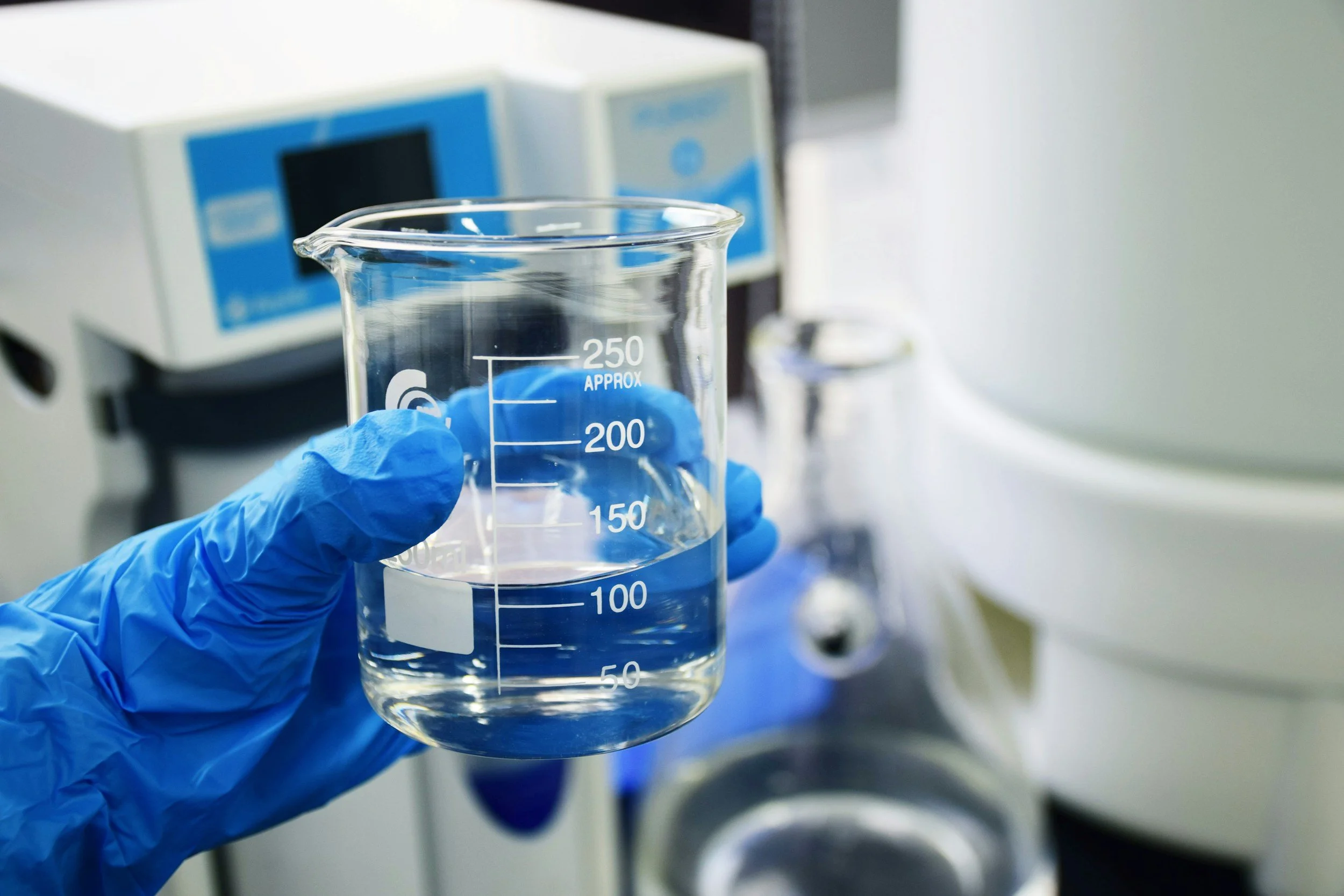
Importance of an In- Home Water Test
A professional water test is the foundation for the right water system — it identifies the specific contaminants you have so treatment is targeted, effective, and cost-efficient.
Sulfur bacteria: Often cause a rotten-egg smell and may produce slime in your plumbing.
Tannins: Leaves yellow-brown staining on laundry, fixtures, and glassware and give water a bitter taste.
Iron: Shows up as reddish-brown staining, metallic taste, and water discoloration.
Saltwater intrusion: Increases chloride and overall salinity, causing a brackish taste and corrosion of plumbing.
Knowing exact contaminant levels prevents over-or under-treatment, extends equipment life, and protects your health and property. We recommend a comprehensive test before selecting any treatment system, so you get a custom solution that solves the real problem — not a guess.
When to Send a Water Sample to The Outside Lab
Some samples must be sent to a certified lab for accurate, legally acceptable results.
Common reasons:
Mortgage-required potable water verification, targeted contaminant checks (nitrate, lead, arsenic, VOCs, PFAS), and bacterial screening (total coliform, E. coli).
Specific Health concerns: Samples can be checked for numerous different pollutants, contaminates, and bacteria.
Labs use rigorous methods to quantify levels and issue reports that lenders and public health departments accept. We Collect samples exactly as instructed—sterile bottles, preservatives, and tight chain-of-custody—so results are valid. If bacterial tests (coliform/E. coli) come back positive, we can treat the source immediately and re-test.